
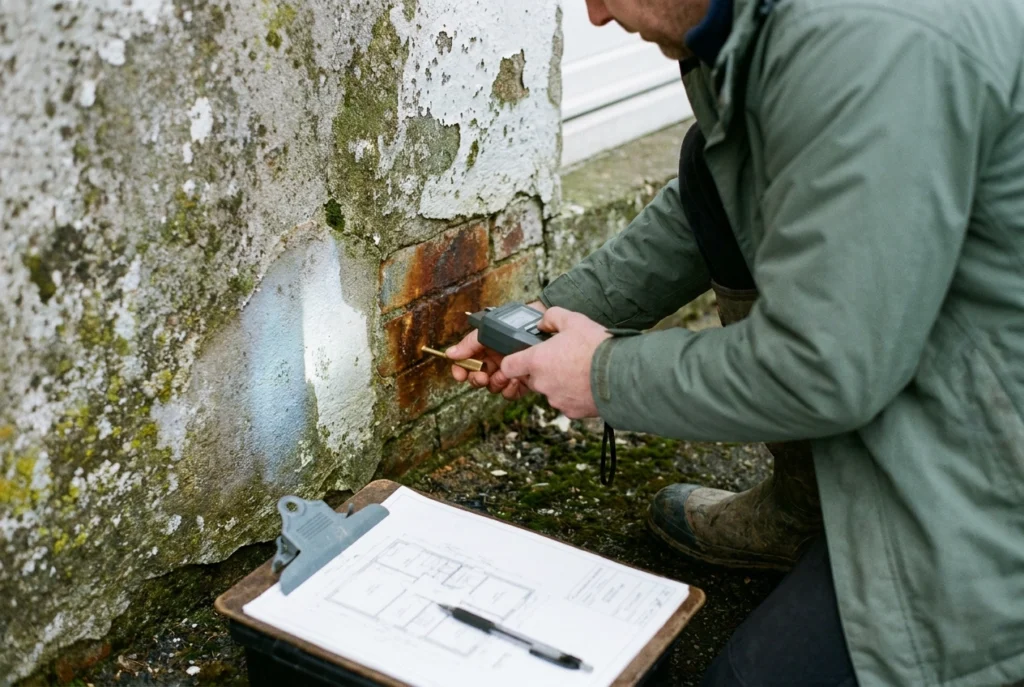
If you can smell damp, see black mould, or feel a cold, wet patch on a wall, the important question is not simply “do I have rising damp?” It is “where is the moisture coming from, and why?” In Bournemouth and across Dorset, rising damp is often named before the cause has been properly investigated. RICS notes that rising damp is a description, not a diagnosis, and that true failure of an original damp-proof course is rare.
This guide explains how to choose a damp specialist who investigates before treating. You will learn how rising damp, penetrating damp and condensation differ, what a credible survey actually involves, how to tell a proper investigation from a quick sale of injected chemicals, and what questions to ask before committing money. We also cover roof, chimney and gutter defects, local housing quirks, and what landlords, buyers and letting agents should expect. EX10 is a Bournemouth damp and drone surveying specialist that identifies the underlying cause using moisture meters, thermal imaging where appropriate and practical building expertise, rather than covering up symptoms. To book a professional survey, visit www.ex10.com or call 01202 790212.
Rising Damp Is a Description, Not a Diagnosis
If you have been told your Bournemouth home has rising damp, the question worth asking is not which damp proofing company is cheapest. It is who will tell you what is actually going on before anyone drills into your wall.
Damp is simply excess moisture that should not be there. The RICS consumer guide on damp and mould advises investigation wherever part of a home is not dry to the touch, shows black mould, or smells musty.
That same guidance makes the point that matters most here: “rising damp” is not a conclusion, because the phrase does not identify the source of the excess moisture. It adds that failure of an original damp proof course is extremely rare, and that rising damp is often misdiagnosed.
This is a commercial issue, not just a technical one. A firm quoting for injected chemicals before establishing where water is entering is treating a symptom, and the damp will return while the real source continues.
EX10 is a Bournemouth damp and drone surveying specialist that investigates the cause first, then recommends a solution. Our guide on how to spot the cause before you pay explains the signs to read first.
Rising Damp, Penetrating Damp or Condensation? Telling Them Apart
Rising damp, penetrating damp and condensation are routes moisture takes, not root causes. Always separate two steps: find the pathway, then find the source.
Rising damp is ground moisture drawn up through masonry by capillary action. Look for low-level tide marks, damp plaster and sometimes salts around skirting height. It depends on whether the original damp proof course has actually failed.
Penetrating damp enters sideways through the fabric: defective render, cracked masonry, blocked gutters, failed flashing, leaking roofs, or poor detailing around windows and doors. Wet patches appearing after heavy rain usually point here, and our guide to penetrating damp in Dorset explains how these external defects are traced.
Condensation forms where room air meets a surface at or below its dew point, so it clusters at cold bridges, poorly ventilated corners, bathrooms and bedrooms.
| Sign | Likely route |
|---|---|
| Low-level tide mark, salts by skirting | Rising damp |
| Wet patch after rain, often high up | Penetrating damp |
| Mould on cold walls and windows | Condensation |
The three often overlap in one property, so treat this table as a rough screen, not a diagnosis. Separating them properly needs a survey with measured readings.
What a Credible Rising Damp Investigation Actually Involves
The Property Care Association’s Code of Practice on the control of dampness in buildings sets the benchmark. It provides an overarching method for investigating dampness and lists the recognised moisture sources: rainwater penetration, atmospheric moisture, rising damp, hygroscopic or deliquescent salts, plumbing defects and subfloor ventilation.
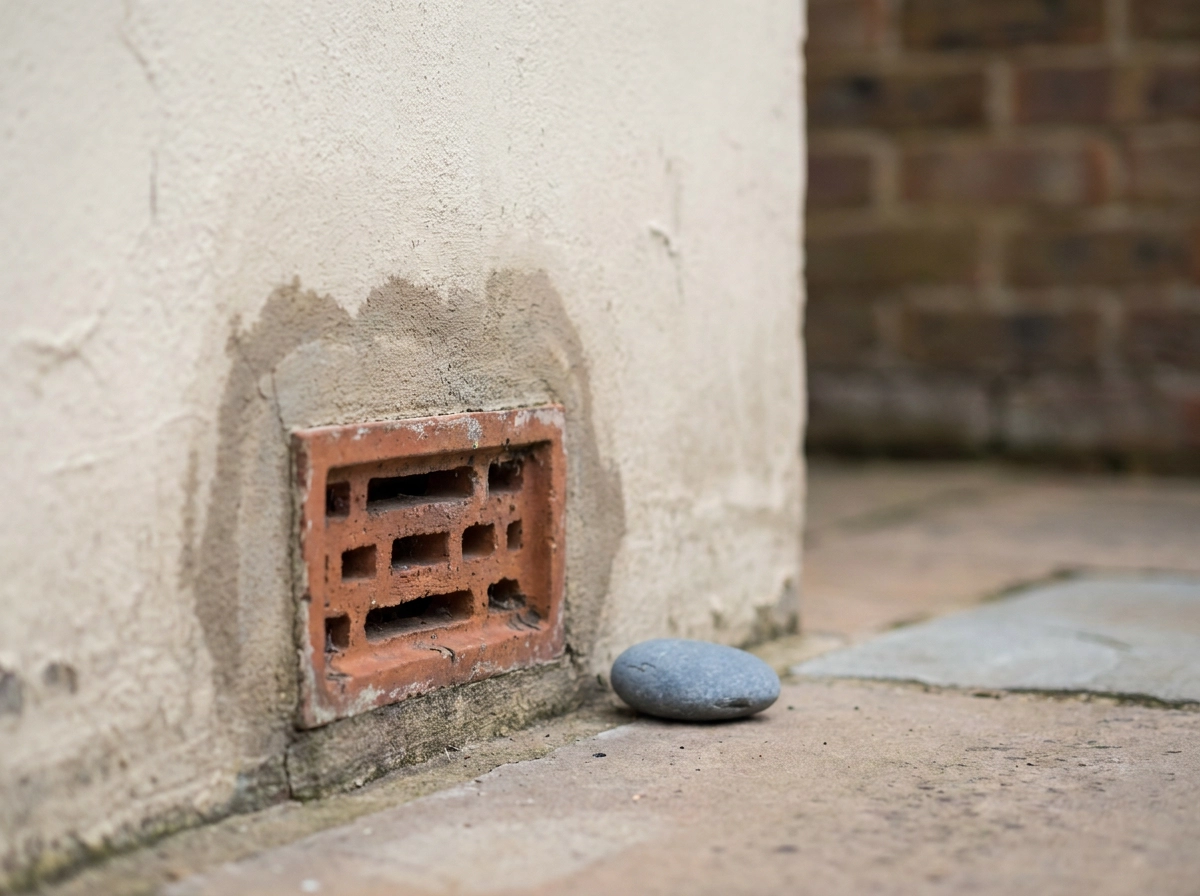
A credible survey follows a sequence. It inspects the building fabric internally and externally, considers drainage, gutters, ground levels and subfloor ventilation, takes measured readings across the wall in profile rather than one spot reading, and assesses how the property is ventilated and heated.
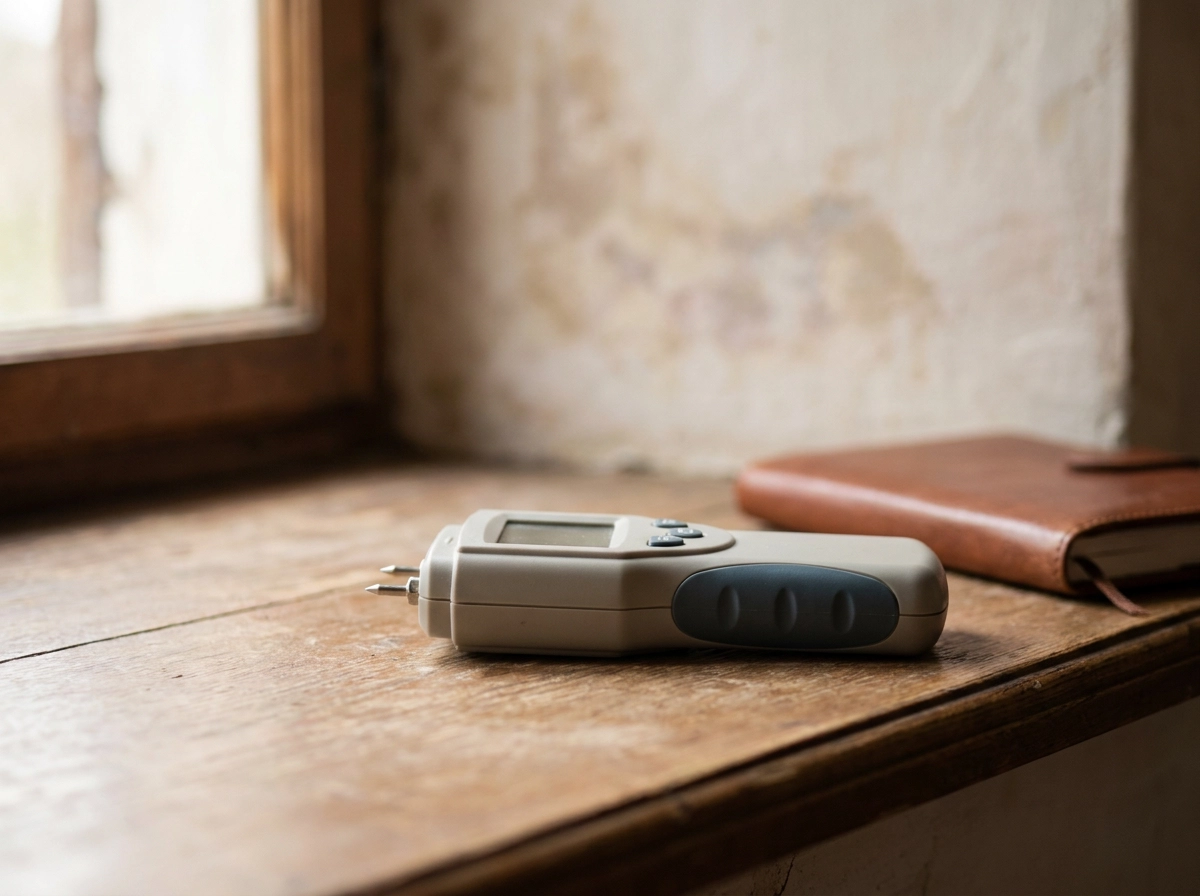
EX10 carries out its own surveys using professional moisture meters, thermal imaging where appropriate and drone roof and building surveys for hard-to-access areas, alongside practical building expertise. How a rising damp specialist finds the real cause in Dorset explains that approach further.
The report matters as much as the visit. The Code covers inspection procedure, inspection reports, control and quality assurance, so expect a written record of findings, the readings taken, the survey’s limitations and a stated strategy for putting things right. That strategy is the point: it explains what will be done, why that remedy suits the cause found, and what happens if the first fix does not resolve the readings.
How to Spot a Proper Survey From a Quick Sale of Injected Chemicals
Sales-led visits follow a pattern. One meter reading is used to declare rising damp, a quote appears on the spot, no one explains where the moisture is coming from, and the walls, roof and drainage outside are never examined.
Chemical damp proof course injection is a legitimate remedy in correctly diagnosed cases. It creates a barrier against capillary movement only. It cannot stop penetrating damp, condensation or a leaking gutter. The BS 6576 code of practice pairs diagnosis with installation for exactly that reason. Not every damp problem needs chemical treatment, and a firm that says otherwise has told you something useful about how it sells.
A proper surveyor physically checks ground levels and external plinths, gutters, downpipes and failed joints, subfloor ventilation, the roof space or covering, and plumbing leaks before drawing conclusions. Drone roof and building surveys earn their place here, revealing chimney, flashing and gutter defects that cannot be seen safely from ground level and are easily missed on an internal-only visit.
If the diagnosis is still unclear, our guide to damp proofing in Dorset explains how the three damp types differ and why the cause comes first.
Questions to Ask Any Damp Specialist Before You Commit Money
If a quote arrives without a diagnosis, these questions separate the investigator from the salesperson.
- Will you investigate the cause before recommending treatment, and explain in writing which moisture source you believe is responsible and why? The PCA Code of Practice expects practitioners investigating dampness to be trained and competent, so ask how your surveyor was trained and what certification or membership they hold.
- What testing will you carry out, and will the findings and readings be included in a written report I can keep? Ask for measured readings in a written report you can keep, and see our guide to when to seek professional help for the warning signs.
- Will you inspect the outside of the building, the roof, the chimney and the drainage, or is this an internal check only?
- What are the limitations of your survey, what happens if the problem comes back, and what is the stated strategy for putting it right?
Finally, ask which guidance the survey follows. RICS directs readers to a specialist building surveyor and to a survey compliant with the Joint Position Statement, Investigation of moisture and its effects on traditional buildings, published by RICS, Historic England and the PCA. A firm that cannot name the standard it works to has not answered the trust question.
When the Real Cause Is the Roof, Chimney or Gutters
A damp patch halfway up a wall, at ceiling level or around a chimney breast rarely points to rising damp. Moisture is arriving from above or outside.
Across Bournemouth, Poole and Dorset, the usual culprits are slipped or cracked roof tiles, failed mortar, defective flashing around chimneys and dormers, perished pointing, blocked or leaking gutters and downpipes, and cracked or poorly detailed render.
EX10 uses drone roof and building surveys to inspect hard-to-access roof coverings, chimney stacks, valley gutters, flashing and guttering without unnecessary scaffolding, then combines those images with moisture readings taken inside.
Be clear on scope: a drone survey supports the investigation and can quickly confirm or rule out an external defect, but it does not replace a hands-on inspection where access is safe and permitted. Judging firms on how they diagnose, not just what they quote for, matters here, and the same principle applies when you compare mould and condensation specialists in Dorset.
A firm that only inspects the inside of the wall will keep missing external causes. That is why the survey method matters when choosing who to hire.
What Bournemouth and Dorset Homes Tend to Throw at Damp Surveys
External factors aside, the building itself shapes what any survey uncovers. Bournemouth and Poole mix Victorian and Edwardian terraces with rendered and pebbledashed coastal properties, post-war homes whose ground levels or extensions have been altered, and flats with limited cross ventilation. Each brings its own moisture pathways.
Coastal weather adds pressure. Driving rain off the sea strikes exposed elevations in Poole and Christchurch, indoor humidity climbs through winter when windows stay shut, and heavy rainfall can overwhelm gutters and drainage. These conditions commonly produce damp that looks like rising damp at skirting level but traces back to penetrating damp, blocked guttering or condensation. Investigation therefore comes before any diagnosis or quote.
If you have noticed a tide mark at skirting height, our guide to rising damp treatment for Dorset homeowners explains how the three moisture types differ.
EX10 surveys homes and commercial buildings across Bournemouth, Poole, Christchurch, Wimborne, Ferndown, Ringwood, New Milton and the surrounding area. Different owners also carry different stakes in the findings.
Landlords, Letting Agents and Buyers: Surveys With Different Stakes
Different properties carry different stakes, and the type of owner changes what a survey needs to deliver.
Landlords and letting agents need more than a treatment invoice. An investigation-first report sets out the cause, the remedy and which maintenance responsibilities sit with whom, which is what you need when a tenant reports damp or a deposit dispute looms.
For buyers, a pre-purchase damp inspection before exchange is, on reasoning alone, the cheaper route: identifying the cause while you can still negotiate costs less than inheriting it later. A seller’s quick treatment quote, with no diagnosis attached, tells you little about whether the damp will return.
Commercial clients face damaged finishes, disrupted occupants and repeat repairs. Documenting the cause protects both the building and the budget, and gives any contractor a clear brief.
Remember that a survey is an assessment, not a commitment to treatment. A good report gives you findings you can take to other trades if you choose. Our damp survey in Bournemouth explains what that investigation involves. Book through www.ex10.com or call 01202 790212.
Frequently Asked Questions About Rising Damp in Bournemouth
Landlords and buyers ask the same questions, so here are direct answers.
Is rising damp common in Bournemouth homes?
RICS advises that failure of an original damp proof course is extremely rare. Many problems labelled rising damp turn out to be penetrating damp or condensation.
How can I tell rising damp from condensation?
Condensation forms where room air meets a cold surface, often seasonally and in specific rooms. Rising damp shows as low-level damp and salts. Only a survey with measured readings can confirm which it is.
Do I always need chemical damp proofing?
No. Injection is one option for specific, diagnosed cases. Treatment should never be recommended before the source of the moisture has been identified.
How much does a damp survey cost?
Costs vary with property size, construction and access, so no single figure applies. Contact EX10 on 01202 790212 for details.
Can a drone survey find the cause of damp?
It is very useful for roof, chimney, flashing and gutter defects that are hard to see from the ground. It works best alongside internal moisture testing.
What should I do next if I have been told I have rising damp?
Get an independent investigation first, and ask for a written report with readings, limitations and a clear repair strategy.
Choosing Someone Worth Trusting
The trust question is really a method question. Choose the firm that investigates the cause, documents its findings and explains its reasoning before it quotes for treatment.
Keep this checklist:
- Ask what will be inspected, inside and out.
- Ask for moisture readings and a written report.
- Ask how the surveyor was trained and what certification they hold.
- Be cautious of any quote produced without an external inspection.
Condensation, penetrating damp and rising damp look alike in Bournemouth properties, yet each needs a different response. Treating the wrong one wastes money and rarely solves the problem.
EX10 is a Bournemouth damp and drone surveying specialist covering Bournemouth, Poole, Christchurch, Wimborne, Ferndown, Ringwood and New Milton. Book a professional survey at www.ex10.com or call the survey office on 01202 790212.
Conclusion
Rising damp is a description, not a diagnosis. Condensation, penetrating damp and rising damp can look alike in Bournemouth homes, yet each needs a different response. The safest approach is a proper investigation: internal moisture readings, an external inspection, and a written report that explains the findings, limitations and repair strategy before any treatment is quoted. Trust is therefore a method question. Choose the firm that investigates first, documents clearly and explains its reasoning. EX10 is a Bournemouth damp and drone surveying specialist covering Bournemouth, Poole, Christchurch, Wimborne, Ferndown, Ringwood and New Milton. Book a professional survey at www.ex10.com or call 01202 790212. Get the cause confirmed first, then act with confidence.